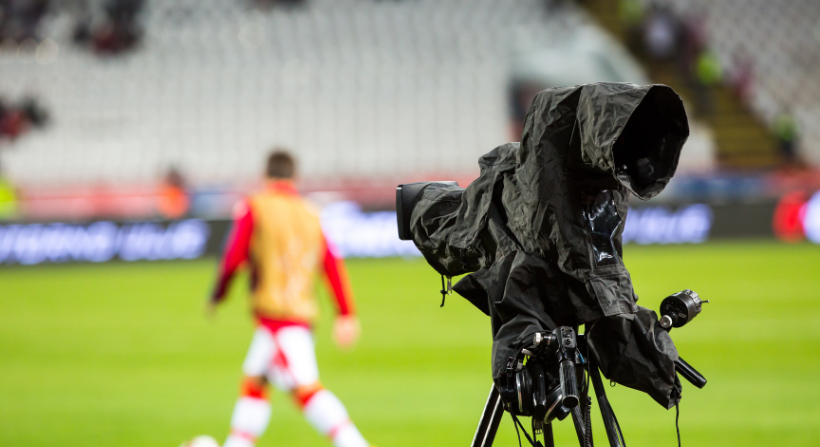
The renewal meeting always goes the same way. A slide shows an impressions number. Someone from finance asks what it actually means. The room goes quiet, and the sponsor spends the next ten minutes defending a number nobody in the room fully trusts, including the person presenting it.
This is the real problem behind most sports sponsor reporting. The numbers are easy to produce and hard to defend. Fan content flips that. A fan holding up a branded scarf on camera is proof.
A modeled “estimated eyeballs” figure is a guess with a decimal point attached to make it look precise. This guide covers where sponsor reporting usually goes wrong, five fixes that actually hold up in a budget meeting, a quick self-check you can run before your next one, and what a stronger renewal report looks like once it is built on real moments instead of estimates.
- The Sponsorship ROI Problem No One Says Out Loud
- Old Reporting vs Fan Content Proof
- 5 Mistakes Sports Sponsors Make When Proving ROI
- The 60-Second Sports Sponsor Self-Check
- 3 Tips for Turning Fan Content Into a Renewal Case
- What a Fan-Content-Backed Sponsorship Report Actually Looks Like
- Where Vupop Fits for Sports Sponsors
- The Sponsor Who Shows Up With Proof Wins the Room
- FAQs
The Sponsorship ROI Problem No One Says Out Loud
Signage impressions and estimated visibility numbers are easy to generate. They are also easy to dismiss the moment someone pushes back, especially once a finance team starts asking how the estimate was actually calculated.
Understanding the key difference between sports sponsorship and sports advertising helps here too, since a sponsorship is meant to build a real connection with fans, not just buy space for a logo the way a straight ad buy does.
A number built on assumptions cannot prove that connection happened. A real fan moment can, and it holds up far better under questioning.
Old Reporting vs Fan Content Proof
Traditional sponsorship metrics no longer tell the full story. Here is how static reporting compares directly against real-time fan content proof.
Here is a side by side breakdown of traditional sports reporting versus verified fan evidence:
| Old Way | Fan Content Proof |
| Estimated signage impressions | Actual fans mentioning or showing the brand |
| One report at the end of the season | Ongoing proof, matchday by matchday |
| Hard to verify | On video, timestamped, real |
| Feels like marketing math | Feels like evidence |
Also check out 5 Bad Sports Sponsorship Examples Brands Can Learn From
5 Mistakes Sports Sponsors Make When Proving ROI
Proving return on investment requires moving past outdated engagement metrics. Avoid these five common reporting mistakes to build a stronger case for sponsorship renewals.
Mistake 1: Counting Impressions Instead of Attention
A logo appearing in frame is not the same as a fan noticing it. The fix is tracking moments where fans actually engaged with the brand on camera, not just where a banner happened to be visible somewhere in the background of a wide shot.
A camera picking up a logo for two seconds proves nothing about whether anyone in the stadium actually cared.
Mistake 2: Never Capturing What Fans Actually Say
A survey asks fans what they think, usually days after the moment already happened. Real fan content shows what they actually said, unscripted, in the moment, before anyone had time to think about how to phrase it.
That kind of raw fan engagement is something no questionnaire can fake, and it reads as far more honest to anyone reviewing the report later, finance team included.
Mistake 3: Reporting Once a Season Instead of Continuously
Assembling one report in May means starting from zero every single time, digging back through a whole season of footage under deadline pressure.
The fix is a running highlight reel built matchday by matchday, so the renewal case is already halfway built before the meeting is even scheduled, not assembled in a panic the week before.
Mistake 4: Treating All Fan Content the Same
Ten clips where a logo is barely visible in the corner are worth less than one clip where a fan is genuinely excited about the brand. This matters most for sporting goods brands, where the product itself often shows up naturally in a fan’s own footage, gear in use rather than gear on a shelf in a catalog shot.
That kind of natural placement is worth far more in a renewal deck than a dozen background logo sightings ever will be.
Mistake 5: Skipping Rights Before It Ends Up in a Renewal Deck
A quick note, not a full legal detour: confirm permission on any fan clip before it goes in front of a sponsor’s own leadership. A great moment with no clear rights is a liability dressed up as proof, and it is far better to catch that gap early than to explain it after the fact.
The 60-Second Sports Sponsor Self-Check
Run through this before your next renewal meeting.
- Do you have that moment on video, not just a screenshot?
- Can you point to a specific fan moment featuring the brand from the last month?
- Could you show this to your own finance team and have it hold up without a caveat?
Two or fewer yes answers means the next renewal conversation is starting from a weaker spot than it needs to.
3 Tips for Turning Fan Content Into a Renewal Case
Securing sponsorship renewals requires presenting clear, unassailable value. Here is how to transform raw matchday fan content into a compelling business case:
Tip 1: Build the Reel Before the Meeting, Not the Week Of
Ongoing collection beats a last-minute scramble through months of old footage. Start the folder on day one of the sponsorship, not the week before renewal.
Tip 2: Let the Fan’s Own Words Do the Selling
A genuine reaction outperforms a scripted testimonial every time, since nobody in the room believes a testimonial was not shaped by a marketing team somewhere.
Brands reward fans through content campaigns precisely because that authenticity is hard to manufacture any other way, and it shows the moment a real clip plays next to a scripted one.
Tip 3: Pair One Number With One Moment
A strong report needs both. A stat alone feels abstract, easy to nod at and forget by the next meeting. A clip alone feels anecdotal, one good moment that could just be luck.
Together, they are close to impossible to argue with in the room, since the number backs up what everyone just watched.
What a Fan-Content-Backed Sponsorship Report Actually Looks Like
Keep it simple, one clear headline stat, three to five standout fan moments, and a short note on what changed since the last report.
This is also where tracking the right KPIs for sports marketing teams pays off, since the report should show a number that moved, not just a pile of clips with no direction behind them.
Where Vupop Fits for Sports Sponsors
Vupop helps surface the fan moments that actually feature a sponsor, already organized and ready to drop into a report.
Instead of a team manually scrubbing through hours of matchday footage the week before a deadline, the strongest clips are already sitting there, sorted and ready.
The Sponsor Who Shows Up With Proof Wins the Room
Every renewal meeting has two kinds of sponsors. One shows up with an impressions estimate and hopes nobody asks a hard question. The other shows up with a fan holding a scarf on camera, saying something real, unscripted, and impossible to fake.
That second sponsor rarely has to defend the number, because the room can see the proof for themselves and decide on the spot.
See how Vupop helps sponsors and brands build that proof continuously, so the next renewal meeting starts from strength instead of a scramble.
FAQs
How many fan moments does a sponsor actually need for a strong report?
Fewer than most people assume. Three to five genuine moments beat a folder of fifty mediocre clips, since the person reviewing the report only has time to watch a handful anyway. Quality of the moment matters far more than the total count.
Does this approach work for smaller, local sponsorships too, or only major league deals?
It works better at the local level in some ways. Smaller sponsorships often have closer, more personal fan moments, and a local sponsor rarely needs the volume a national deal would, just a handful of real, specific clips that clearly show the relationship working.
What happens if the best clip does not have clear permission yet?
Leave it out of the report, no matter how good it looks. One unresolved clip is not worth the risk of an awkward question from leadership later. Go back to the fan for permission first, or find a second moment that already has it.